
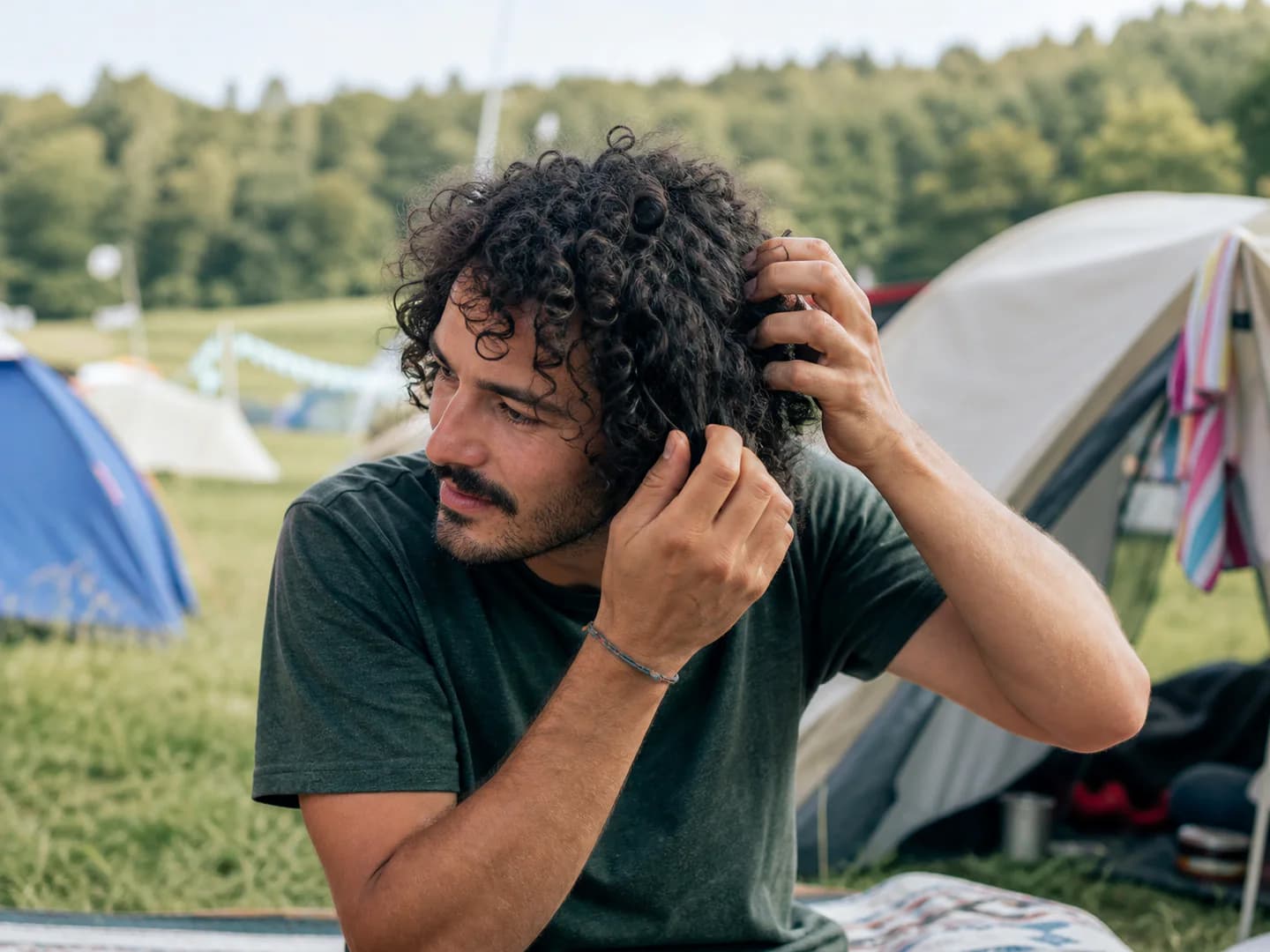
The short answer: plan for three different hair days
The best festival routine is not a smaller copy of your full home routine. It is a three-stage plan. Arrive with clean, conditioned and fully dry hair. Refresh only the sections that lose shape. Move into a loose, contained style when sweat, wind or tangles make wearing it down more trouble than it is worth.
Day one: wear the wash day
Style at home with enough Hold for your normal frizz level, let the hair dry completely and avoid breaking the cast before travel if that helps your curls last.
Day two: spot-refresh
Mist only flattened or separated areas, smooth or scrunch in a tiny amount of gel or mousse, then leave the hair alone while it dries.
Day three: choose comfort
Wash if your scalp needs it. Otherwise use a loose half-up style, clip, braid or bun that controls tangles without pulling at the hairline.
If frizz is already your main problem, establish a reliable base with the frizz control routine. For the morning after, use the next-day curl guide.
What a festival weekend actually does to curls
Humidity changes how much water a hair fibre holds, which can alter shape and separate clumps. Conditioner and film-forming stylers reduce friction and frizz, but no product makes hair weatherproof.
UV exposure can affect the cuticle, colour and strength over time. Shade and a hat protect hair and exposed scalp; use broad-spectrum SPF 30+ on exposed skin.
Sweat itself is not the main problem. Sweat, sebum, dust, sunscreen and product collect on the scalp. When it becomes itchy, sore, oily or dirty, wash instead of adding dry shampoo.
Humidity and rain
Curls may swell or lose definition; fine waves can flatten while tighter patterns tangle more easily.
Sun and heat
Hair may feel drier and exposed parts of the scalp can burn. Use shade, a comfortable hat and sunscreen on skin.
Friction
Tent fabric, pillowcases, hoodies, hats and touching disturb clumps. Less rubbing often helps more than more cream.
Dust and product buildup
Dust sticks to oily roots and layered stylers. Keep the kit small and wash when your scalp signals it.
The explanation of water, conditioning films and friction is grounded in a broad review of hair-care physicochemistry. For sun protection, we follow the AAD's dermatologist-reviewed summer guidance.
What festival-goers keep doing in real life
Reddit discussions across curly-hair, camping and festival communities repeat the same basic pattern: people simplify. They wash before leaving, carry water and one styler, wear the first day down and gradually contain the hair as the weekend gets messier.
Public Instagram and TikTok posts visualise the same ideas: a five-minute touch-up, small hair kit, day-one versus day-three result and rain rescue. They reveal formats and experiences, not scientific proof or universal products.
A mister beats a full restyle
A small spray bottle reactivates the top layer, hairline or flattened side without soaking every curl.
One styler is enough
One familiar gel, mousse or light styler is easier to control than layering cream, oil and spray.
Hair gets more contained over time
Loose arrival-day curls often become half-up hair, a roomy clip, loose bun or braid later.
Night protection changes the next morning
A loose pineapple, bonnet or satin pillowcase reduces friction and next-morning repair.
A little frizz is part of the plan
Do not chase every flyaway. Protect comfort, scalp and overall shape; let festival texture exist.
Experience tip, not a rule
Some threads suggest daily dry shampoo, heavy conditioner-water mixes, tight braids or washing in nature. These can cause residue, tension or environmental harm. Filter community advice through scalp comfort, product directions and site rules.
Do the important work before you leave
The most valuable festival styling time is the hour you still have a normal shower, mirror and clean towel. Do not use that wash day to test a new viral routine. Use the products and amounts you already understand.
01
Clean for your actual scalp
Use your normal shampoo and focus on the scalp. Clarify only if you already have clear buildup; a festival is not a reason to strip the lengths pre-emptively.
02
Condition and detangle in sections
Give the hair enough slip, then use fingers, a wide-tooth comb or your normal curl brush while the hair is wet. Do not save a major detangling job for the tent.
03
Add reliable Hold
Use a gel or mousse you have already tested. Apply it evenly enough that clumps keep their shape, especially around the crown and outer layer.
04
Dry all the way
Diffuse on controlled heat or air dry with enough time. Fully dry hair tolerates travel, hoodies and tent setup better than curls that are still setting.
Pack a camp kit and a much smaller field kit
Leave this at camp
- +Travel-size gentle shampoo for a genuinely sweaty, itchy or dirty scalp.
- +Conditioner or leave-in with enough slip for wet detangling.
- +One familiar Hold product: gel or mousse.
- +Small water mister that can be filled at camp.
- +Wide-tooth comb or your proven wet-detangling tool.
- +Microfiber towel or clean cotton T-shirt for squeezing out water.
- +Bonnet, satin pillowcase or smooth scarf for sleep.
- +Soft ties, a roomy clip and a hat or bandana.
Carry this onto the field
- +One soft hair tie or secure clip.
- +A hat or bandana for sun, wind or a low-effort final day.
- +A tiny mister and styler in approved, sealed containers, if allowed.
Check the festival rules first
Check the event's current rules before packing. Festivals differ on liquids, aerosols, refillable bottles, glass and container size. Keep all liquids sealed in a waterproof pouch.
Not sure which Hold product earns space in the bag? Start with the gel guide. If you are also packing a cleanser, compare categories in the shampoo guide. If your hair mainly needs detangling slip, learn when a leave-in conditioner helps. For gentler camp drying, use the microfiber towel guide.
A realistic day-one to day-three routine
Treat the schedule as a decision framework, not a promise that every head should last exactly three days. Weather, hair length, density, porosity, scalp oil and how hard you dance matter more than the number printed on the wristband.
Day one — protect the set
Wear the wash day. Keep hands out while the curls settle into the environment. Use a hat for direct sun, but avoid crushing damp hair underneath it.
Day two — repair only what changed
Shake out the roots, inspect the hairline and flattened sleep areas, then spot-refresh. If the underside is tangled, contain it rather than soaking the entire head.
Day three — decide between Clean and contain
Wash the scalp if it is uncomfortable or dirty. If it still feels fine, choose a loose half-up style, clip, bun or braid and stop chasing perfect definition.
Use this decision guide when your hair changes
Use the first action that matches the problem. Give it time to dry or settle before adding anything else. Most festival hair becomes difficult because several fixes are stacked without checking whether the first one worked.
The outer layer is frizzy, but the scalp feels fine
Wet your hands or mist that layer, smooth and scrunch in a pea-size amount of Hold, then let it dry untouched.
The roots are flat
Do not automatically soak them. Change your part, gently lift only after the hair is dry and avoid adding cream or oil at the roots.
The scalp is sweaty, itchy, oily or dirty
Wash the scalp with a suitable shampoo when facilities allow. Dry shampoo can absorb some oil, but it does not remove sweat, dust or accumulated residue.
Rain soaked the entire head
Treat it as a wet reset. Gently squeeze out water, detangle only if necessary and with slip, then apply a small even layer of Hold and let it dry.
The lengths are tangled
Do not force a brush through dry curls. Dampen the area, add conditioner or leave-in for slip and detangle gently from the ends upward.
There is no universal wash schedule. Research on wash frequency, scalp and hair condition helps explain why both aggressive overcleaning and unchecked buildup can create problems.
The five-minute festival refresh
A refresh should be smaller than wash day. Its job is to reconnect a few clumps, calm the surface and restore enough Hold for the next part of the day. If every curl needs rebuilding, either accept a contained style or wash when you can.
01
Read the hair before adding water
Find the exact areas that are flat, stretched or fuzzy. Leave successful curls alone.
02
Use wet hands or a fine mist
Dampen the problem area until it becomes flexible. Avoid saturating the roots unless they also need resetting.
03
Re-form the clumps
Smooth the section between flat hands or finger-coil one stubborn front curl, then scrunch upward.
04
Add less product than on wash day
Emulsify a tiny amount of gel or mousse with water and apply only where Hold disappeared.
05
Let it dry before judging
Air dry, use a clean T-shirt to remove drips or diffuse at camp if practical. Constant touching turns a five-minute refresh into fresh frizz.
How to sleep with curls in a tent
Tent sleep adds friction, heat and awkward positions. You cannot control every movement, but you can stop the hair from rubbing loose against a sleeping bag all night.
- +Protect only dry hair. Put longer curls in a loose pineapple or braid with a soft scrunchie.
- +Use a bonnet, smooth scarf or satin pillowcase if it stays comfortable and cool enough.
- +For short curls, a satin pillowcase is usually easier than forcing the hair into a tie.
- +Keep damp hats, hoodies and towels away from your pillow area.
- +If a style hurts, stings or pulls, loosen it immediately; protective should not mean tight.
The AAD warns about repeatedly pulling styles. If your hairline hurts, the style is too tight — even when you call it protective.
Adjust the plan for your hair, not a curl chart
Curl pattern helps describe shape, but festival choices depend just as much on strand thickness, density, length, oiliness and how easily the hair tangles. Use these as starting points.
Fine waves or curls
Prioritise light Hold, root cleanliness and targeted water. Repeated cream, oil and full-head refreshes can remove volume faster than humidity does.
Medium type 3 curls
A good wash-day gel cast plus small surface refreshes usually gives the best balance between definition and a compact kit.
Coily or very dense hair
Arrive thoroughly detangled, keep moisture and slip available, and consider a loose low-manipulation style before the hair becomes heavily tangled.
Short curls
Use wet fingertips, a small amount of mousse or gel and light scrunching. A cap can flatten the crown, so reshape only after you take it off.
Long curls
Friction and tangling are the main workload. Carry a clip, protect the hair during sleep and contain the lengths before wind and dancing create knots.
Reset your scalp and curls when you get home
When you get home, do not punish the hair with the strongest possible shampoo, hot water and aggressive brushing. The reset should remove residue while giving tangled lengths enough slip.
01
Inspect and pre-detangle
Separate obvious knots gently with fingers. Add a little conditioner before shampoo if your lengths are very dry or matted.
02
Clean the scalp
Use your normal shampoo first. Clarify only when oil, powder, sunscreen or multiple stylers leave a coating that the normal wash does not remove.
03
Condition with enough slip
Work in sections and detangle from the ends upward while the hair is wet and coated. Rushing this step creates avoidable breakage.
04
Wash your sleep and hair accessories
Clean the bonnet, pillowcase, hat, scarf, clips and mister before they go back into your regular routine.
Festival curl mistakes that create more work
- xTesting a completely new routine, strong fragrance or unknown product on departure day.
- xPacking several creams and oils but no simple Hold product or scalp cleanser.
- xSoaking the whole head every morning when only the hairline or crown changed.
- xBrushing dry curls after wind or rain instead of adding water and slip first.
- xUsing dry shampoo for several days as if it removes sweat, dust and styling residue.
- xPulling braids, buns or ponytails tight enough to hurt in the name of protection.
- xGoing to sleep with damp curls trapped under a bonnet, hat or hood.
- xTreating normal festival frizz as a failure and adding product every few hours.
Festival curl FAQ
Should I wash curly hair every day at a festival?
Not automatically. Wash when your scalp feels sweaty, itchy, very oily, dirty or product-coated. A comfortable scalp with slightly frizzy curls may only need a targeted refresh or a loose style.
Can I use dry shampoo on curly hair at a festival?
You can use a small amount if it already works for you and the event allows it, but it only absorbs some oil. It does not clean away sweat, dust, sunscreen or styling buildup, so do not keep layering it onto an uncomfortable scalp.
What are the minimum products to take?
For most people: a small shampoo at camp, conditioner or leave-in if detangling needs slip, one familiar gel or mousse, and a water mister. Add a smooth sleep surface and a soft tie or clip before adding more bottles.
How do I protect curls while sleeping in a tent?
Let the hair dry, then use a loose pineapple, loose braid, bonnet or satin pillowcase. Short curls usually do best with a smooth pillow surface. Any style that pulls or hurts is too tight.
Sources and community research
Medical and hair-fibre sources support the factual guidance below. Community posts are listed separately because they show real constraints and repeated habits, but they are not clinical evidence or product endorsements.
Research and dermatology
Festival-goer experience
These threads and public posts informed the practical problems, packing choices and day-by-day format. Advice was paraphrased, compared across sources and filtered against the research above.